A Beginner's Guide to Mindful Tea Drinking: The 5-Senses Check-In

The kettle clicks off and you have maybe ninety seconds before the tea is ready. Most of us fill that gap with a phone, a stray worry, or nothing we would remember afterwards. Mindful tea drinking begins right there, with a decision that costs nothing: this cup gets your attention.
It isn't a ceremony, and it isn't a performance. You don't need a clay pot, a bamboo whisk, or a silent room. You need one cup and a way to keep your attention from sliding off it. The five senses do that job well. Sight, smell, touch, taste and sound are always available, always changing, and specific enough to hold a wandering mind for a few minutes at a time. If you have tried watching your breath and ended up planning tomorrow's meetings, tea gives your attention something more tactile to grip.
Why Tea Works as a Mindfulness Anchor
Attention needs an object. A cup of tea is unusually generous with them, because it changes from the first moment to the last sip: dry leaf, steam, color, weight, temperature, aroma, aftertaste. Nothing holds still for long, so there is always something new to catch.
Two practical details make it beginner-friendly. First, it's short. A single cup takes five to ten minutes, which is a realistic unit of attention if you're new to this. Second, it's repeatable. You probably already drink tea most days, so you aren't adding a habit to your life; you're changing the quality of one you already have.
One clarification worth making early: noticing is the whole exercise. Feeling calm is a common side effect, not a requirement. If a cup leaves you restless and you noticed the restlessness clearly, the practice worked.
A small practical note: let very hot tea cool for a minute or two before drinking, since scalding drinks are hard on your mouth and throat. If you are pregnant, nursing, or taking medication, check with a doctor or pharmacist before making herbal teas a daily habit.
Setting Up: Ten Minutes, One Cup, Nothing Fancy
Keep the setup boring so the practice can be interesting. That means:
- A tea you actually like, loose or in a bag. Enjoyment is not a distraction here; it's fuel for attention.
- A vessel you can hold with both hands, ideally one that warms up.
- Ten minutes where nobody needs you. Set a timer if it helps you relax into it.
- A surface you don't mind splashing, and the phone in another room.
Same time each day helps more than same tea. Morning, mid-afternoon, or the last half hour before bed all work. And one cup is enough. Three cups in a row turns a check-in into a tasting session, which is enjoyable but a different thing.
Sight and Smell: What Arrives Before the First Sip
Look first
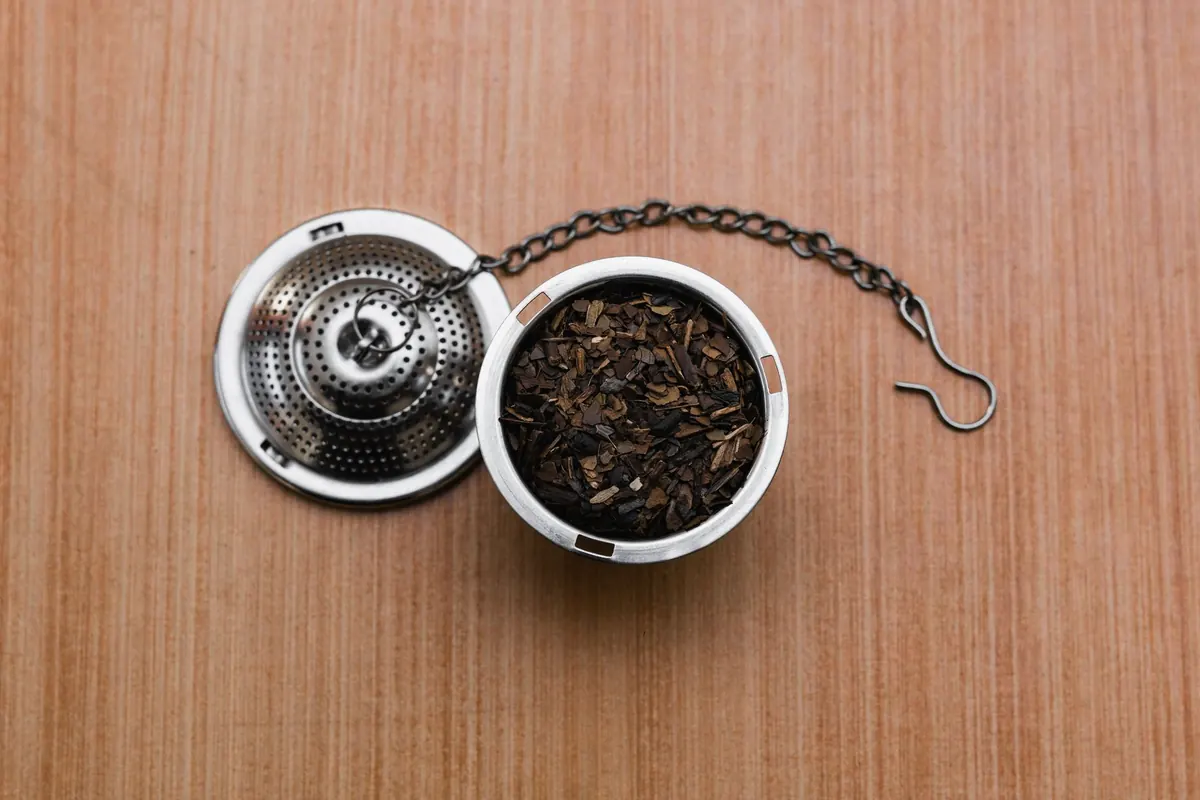
Before the water goes in, put a pinch of dry leaf in your palm. Notice the shape: twisted, flat, rolled into pellets, or fine and dusty. Look at the color honestly — dull green, brown, silver with fuzz, almost black. If you're using a bag, tear it open and look anyway.
Then watch the water. Steam curling off the surface, bubbles rising, the moment the leaf starts to open and sink. Hold the brewed cup up to a window and look at the liquor against the light. Notice how the color deepens as it cools and how the leaves settle at the bottom when you're nearly done.
Then smell, twice
Aroma shows up in at least three places: the dry leaf, the wet leaf right after steeping, and the empty cup afterwards. The last one surprises most people — a well-brewed cup often smells sweeter once it's empty than it did full.
Smell the tea while it's hot but not scalding, with your mouth slightly open. Then describe it in plain words. Hay, toast, jasmine, wet stone, dried apricot, cooked rice. Don't hunt for the "correct" word; there isn't one. Aroma fades within minutes, which is a useful thing to notice without turning it into a philosophy lecture.
Touch and Sound: The Senses We Usually Ignore
Touch
Warm the cup with hot water, tip it out, and feel the heat move into your palms. When the tea is ready, notice the weight of the full cup, then the rim against your lower lip, then the temperature of the first sip versus the last. A first sip and a final sip of the same tea are two different drinks.
Inside your mouth, texture is doing a lot of work. Some teas feel creamy or thick, some feel drying and grippy on the tongue, some make you salivate. All of that counts as noticing.
Sound
Listen to the pour. Water hitting an empty cup sounds different from water hitting a half-full one. There's the click of the kettle, the tap of the lid, the small clink as you set the cup down. Then your own sip: the quiet inhale, the swallow, the breath afterwards.
Close your eyes for one sip and see what you hear that you didn't expect — the fridge, traffic, a bird, your own pulse. Background noise isn't an interruption. Noticing it is part of the check-in, and then you come back to the cup.
Taste: The Sense Most of Us Rush
Taste is where most people start and stop, usually in three seconds. Slow it down with a three-part sip.
- First impression. The first second only. Sweet, bitter, grassy, roasty, flat, sharp? Say it to yourself before your brain revises it.
- The middle. Hold the tea in your mouth for a beat and let it move around. Where do you feel it most — the edges of your tongue, the roof of your mouth, the back of your throat?
- The finish. Swallow, then wait ten seconds before the next sip. What's left behind? Some teas leave a sweetness that shows up late. Others leave a dry, clean feeling.
Two things affect what you taste more than technique does: temperature and whatever you ate beforehand. Very hot tea mutes flavor, and a mint or a garlicky lunch will flatten almost anything. If you want a fair comparison, taste the same tea twice in one week — once in the morning, once in the afternoon — and see what's different.
Putting It Together: A Five-Minute Check-In
You don't have to run all five senses every time. If you only manage one, pick smell or taste and stay with it for the whole cup.
For a fuller version: look at the leaf, then smell the dry tea, then the wet leaf. Hold the warm cup and notice its weight. Pour and listen. Sip in three parts, slowly, and let the cup cool in your hands between sips. When you finish, smell the empty cup and sit for one breath before you get up.
Your mind will wander. It might wander for most of the cup. When you notice that, you've already returned — that return is the repetition that builds the habit, not a failure of it. Skip the grading. Some cups will feel like a small holiday; others will taste like nothing much at all. Both are worth drinking.
You don't need a quieter life to notice a cup of tea. You need one cup, five minutes, and some honesty about where your attention actually is.
Photo: F1Digitals / Pixabay